Dogs and cats are carnivores. Their food should look like it.
Raw meat, edible bone, organ and a little produce — the diet these animals evolved on. Kibble is a shelf-stable convenience invented in the last century. Twenty-plus years of watching pets change on raw taught us which is which.
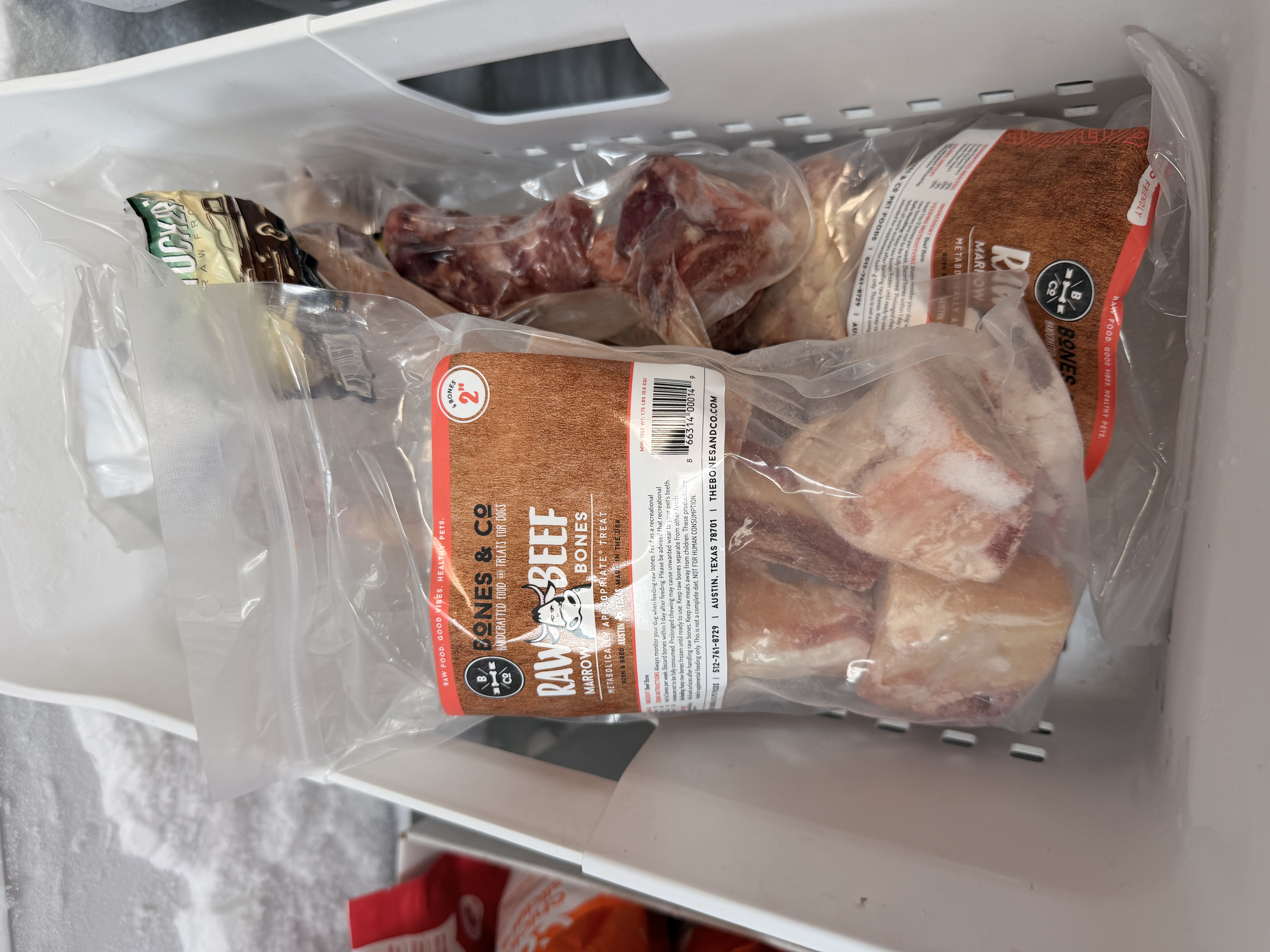
What's in a raw meal
Most complete commercial raw foods follow a prey-model ratio. Here's roughly what a bowl is made of, and why each part is there.
Ten changes owners see first
-
01
Clean teeth
No more dental cleanings under anesthesia. -
02
Clean ears
Chronic ear problems that never quite clear up usually do. -
03
No more yeasty body
The root of most ear, tooth and anal-gland trouble. -
04
Better breath
Within two to three weeks. -
05
Far less poop, less smell
Hard and crumbly, not mushy — the food is being used. -
06
Less water drinking
They hydrate from the food. Still offer fresh water daily. -
07
Rested organs
Digestion stops exhausting the body, which lengthens lives. -
08
More energy
Older animals get a new lease on life. -
09
Fewer food-driven skin allergies
Itching, hot spots and paw-licking often ease. -
10
Lower chronic-disease risk
Cancer, bloat, kidney, liver and gastro problems.
Adaptable carnivores
Dogs tolerate variety and a little produce. Rotate proteins weekly, add recreational bones for teeth, and expect a 1–3 week detox period as the body clears out.
Obligate carnivores
Cats need meat, period — taurine, moisture, and almost no carbohydrate. They're also creatures of habit, so the switch is slower and done with patience, never by starving them out.
"Every body function your dog or cat has will benefit."
Start the transition plan →