Getting a kibble-addicted cat onto raw without a standoff
Texture, temperature and the crumble trick. Plus the one thing you must never do with a cat that stops eating.
By the owners, Animal House of Distinction · Jupiter, FL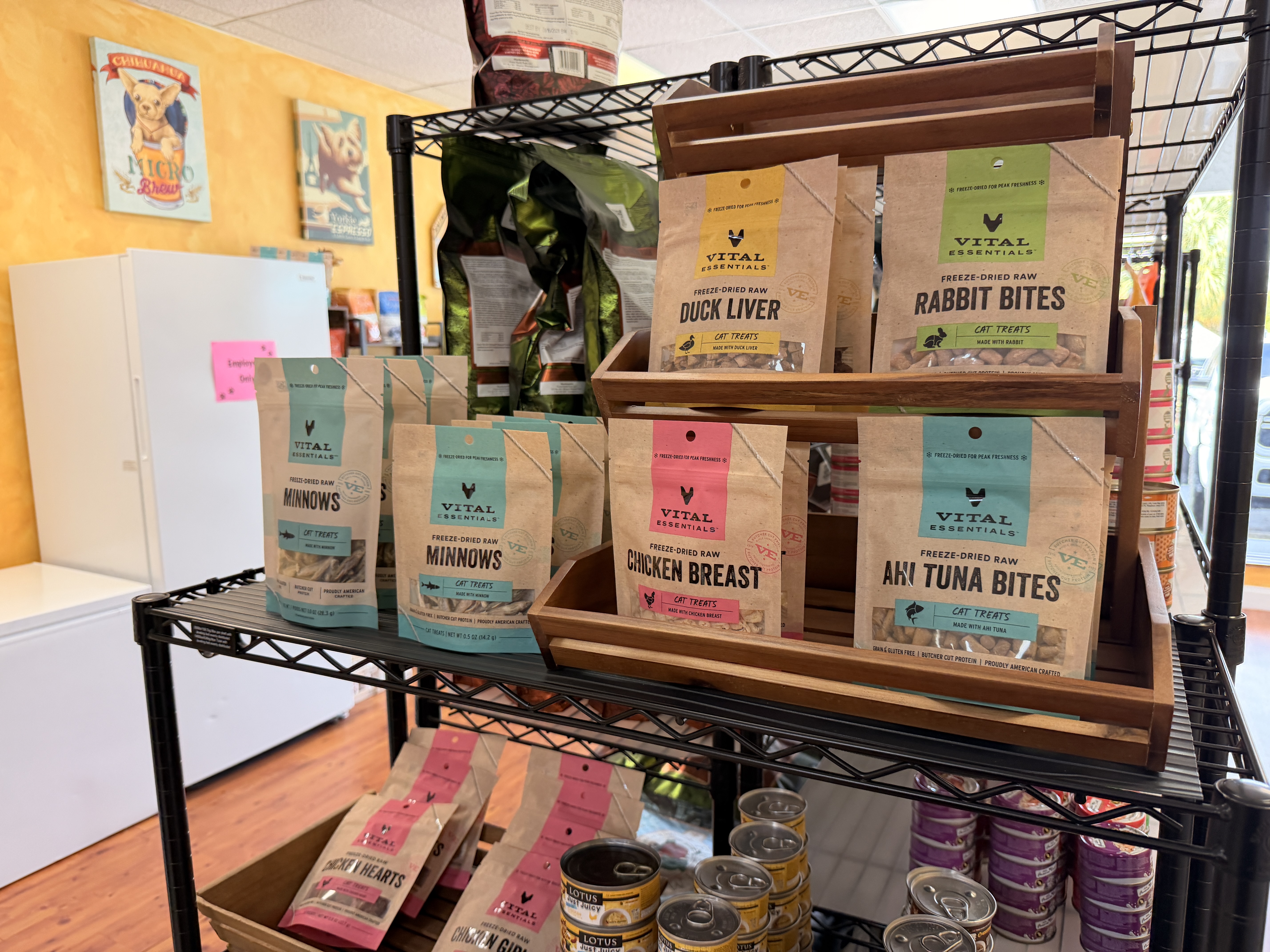
Why cats are different
A dog will try almost anything. A cat decides what "food" is somewhere around six months old and defends that definition for life. Kibble is engineered for this — sprayed with animal digest so it smells intensely of meat while being mostly starch.
A cat is also an obligate carnivore. It has almost no ability to use carbohydrate, needs taurine from meat, and is designed to get most of its water from prey. Kibble fails on all three, which is why so many cats end up with urinary crystals, kidney disease and obesity. Raw is the fix. Getting there is the work.
Rule one: the cat must keep eating
Dogs can fast. Cats cannot. When a cat stops eating, the liver begins mobilizing fat faster than it can process it — hepatic lipidosis — and it can turn dangerous in as little as two or three days, faster in an overweight cat.
So this is not a battle of wills. If the cat refuses the new food, it gets the old food. Every time. You are going to win with patience, not hunger.
Step one: fix the schedule
Most kibble cats free-feed all day. Move to two or three set meals, picked up after 20 minutes. This takes a week and does nothing else — but a cat that arrives at the bowl hungry is a cat willing to be curious.
Step two: the crumble
Buy a freeze-dried raw food in a protein your cat already knows — chicken if they eat chicken kibble. Crumble a pinch to dust over their current food. Not mixed in. On top, where the nose lands first.
Increase the crumble over one to two weeks until it is a real layer. Many cats will start eating the freeze-dried pieces whole at this stage. Freeze-dried is complete nutrition, so if your cat stops here for a while, that is already a huge upgrade.
Step three: introduce the wet texture
Put a teaspoon of thawed raw beside — not in — the current food, warmed to body temperature under a warm tap in a sealed bag. Cold food smells like nothing to a cat; warm food smells like prey.
If it is ignored, take it away after the meal and try again tomorrow. When it is eaten, increase by a teaspoon every few days while shrinking the old food. Some cats take two weeks. Some take six. Both are normal.
Signs it is working
Litter box changes come first: smaller, firmer, far less odor. Then the coat — softer within a month. Water bowl use drops because they are finally hydrated from food. If you have a cat with early kidney values, ask us; this is where we see the most dramatic turnarounds.